Agroforestry
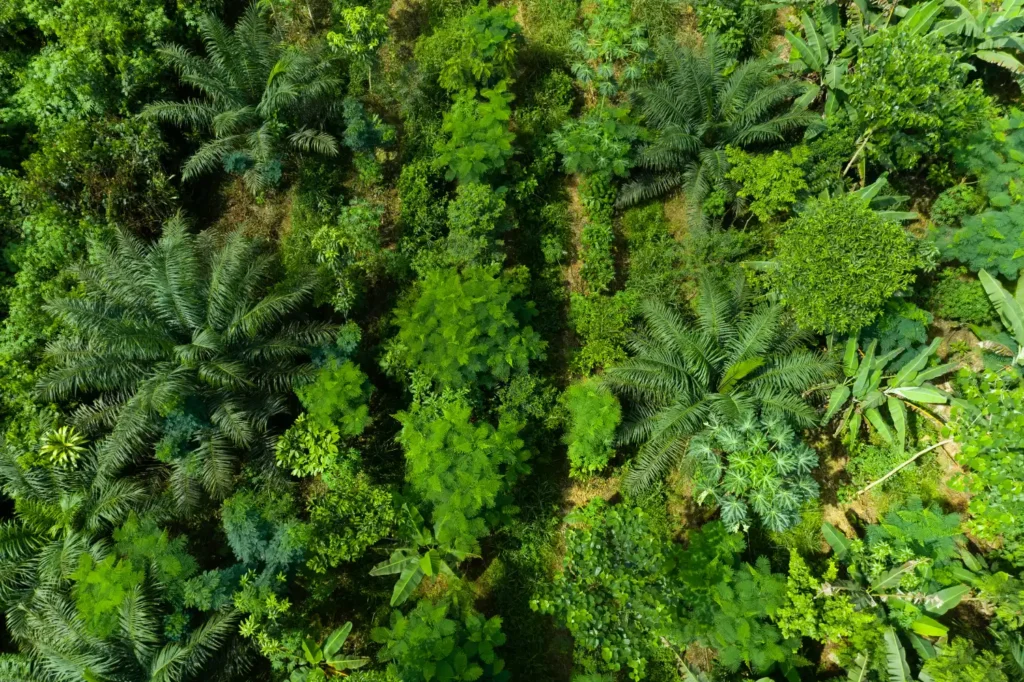
Agroforestry systems imitate natural ecosystems by combining trees, shrubs, and agricultural crops. This offers many advantages.
Climate
Trees and shrubs store CO₂ in biomass and soil, reduce greenhouse gases, and help mitigate climate risks.
Soil improvements
The roots of diverse plants stabilize the soil, while fallen leaves enrich it with nutrients and improve fertility.
Water balance
Shade reduces evaporation, and roots retain water and help filter pollutants.
Biodiversity
Trees create habitats for animals and insects, promote ecological balance, and help control pests.
Social benefits
Trees in agroforestry systems provide additional products alongside the main crop. This increases productivity, income, and food security for farmers.
Sustainability
The system enables long-term, sustainable, and productive farming without the use of external inputs, especially fertilizers and pesticides.
Dynamic Agriculture Explained
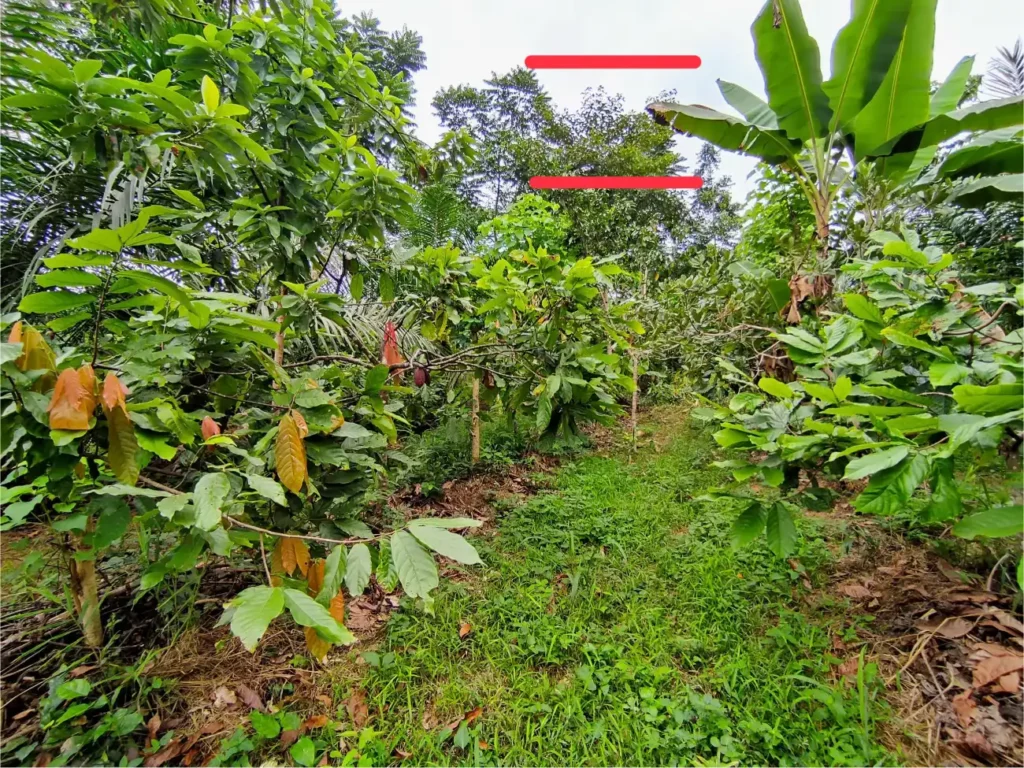
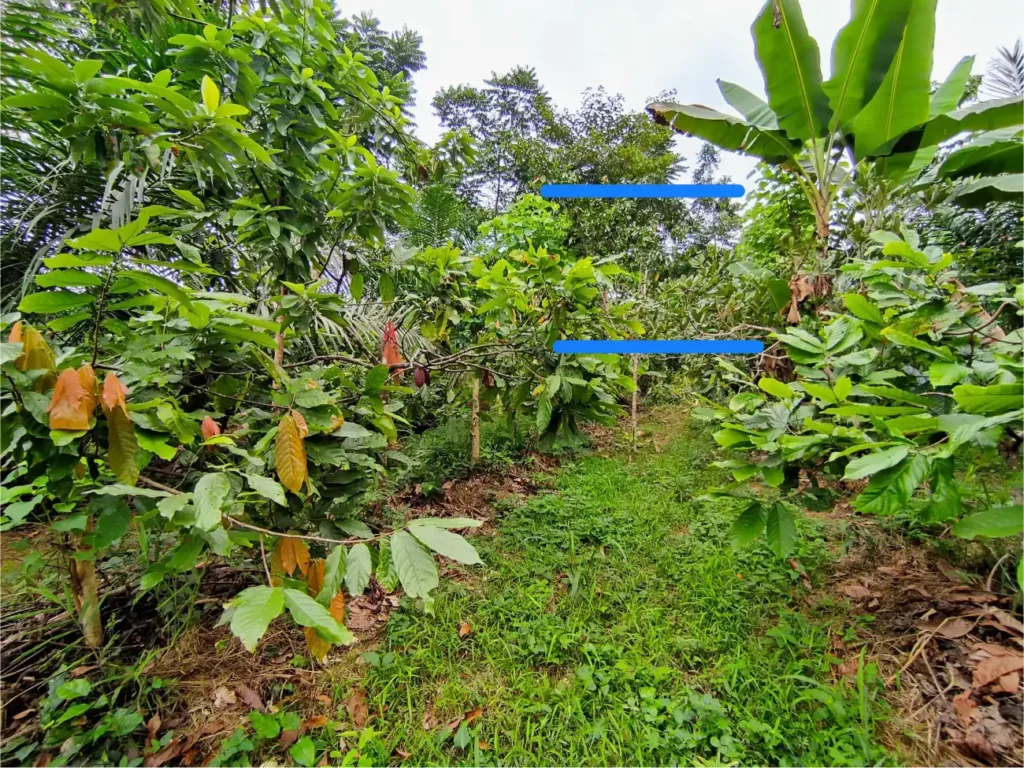
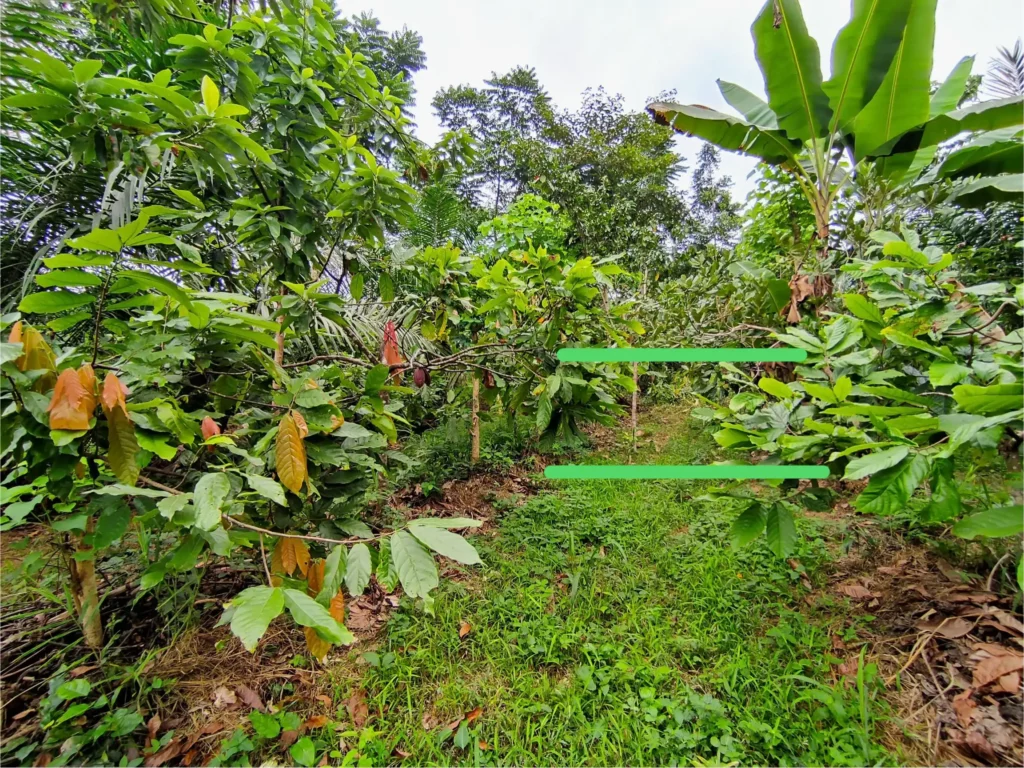
Dynamic agriculture is a farming approach that works with natural processes instead of against them. The management of agroforestry systems is based on the natural layering (strata) of forests to use resources such as light, water, and nutrients efficiently. Each layer is intentionally planted and managed to promote synergies between the plants.
Upper Strata
(between red lines)
- Plant selection: Tall trees such as oil palm, coconut palm, timber trees, or shade trees.
- Management: Regular pruning for light control and harvesting of wood or fruits.
- Function: Provides shade, protects the soil from erosion, and stores carbon.
Middle Strata
(between blue lines)
- Plant selection: Fruit trees, banana plants, and various shrubs.
- Management: Targeted spacing to ensure sufficient light.
- Function: Niche crops diversify the product range and promote biodiversity.
Lower Strata
(between green lines)
- Plant selection: Ground-level cultivation of shade-loving crops such as cocoa, coffee, cassava, ginger, and turmeric.
- Management: Tree pruning, crop rotation, and weed control for optimal ground cover.
- Function: Protects against weeds and soil drying while providing additional yields.
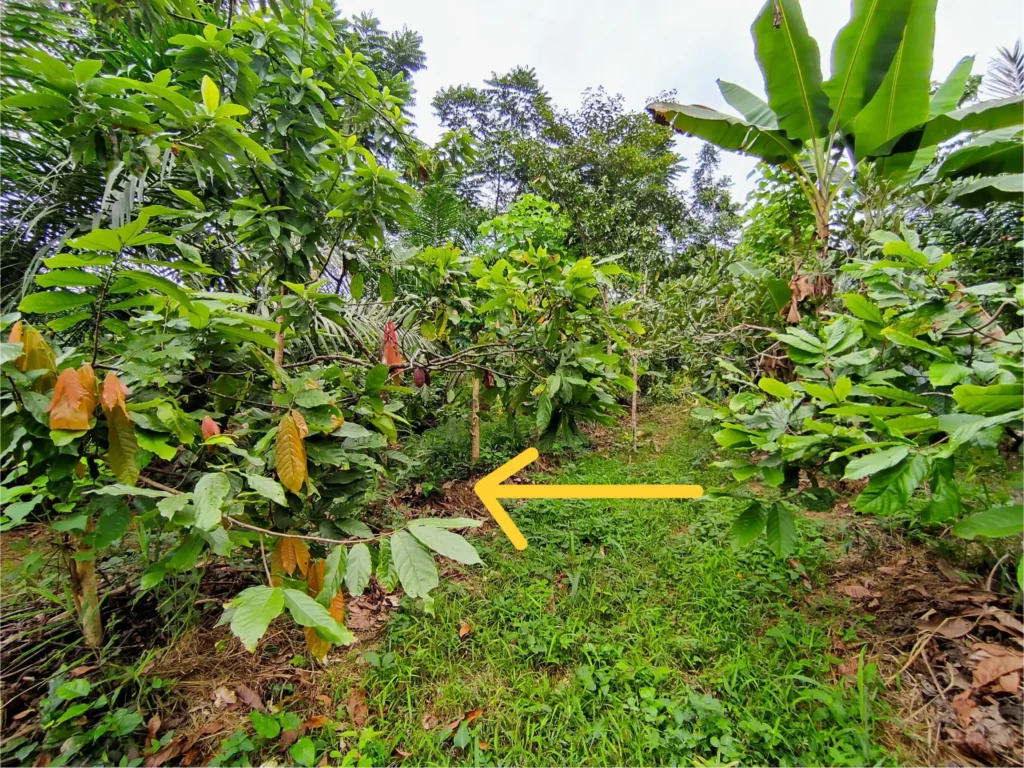
Soil Layer
(yellow arrow)
- Plant selection: Nitrogen-fixing plants that improve soil fertility, such as beans.
- Management: Regular mulching and composting.
- Function: Nutrient retention, improved soil structure, humus build-up, and prevention of soil acidification.
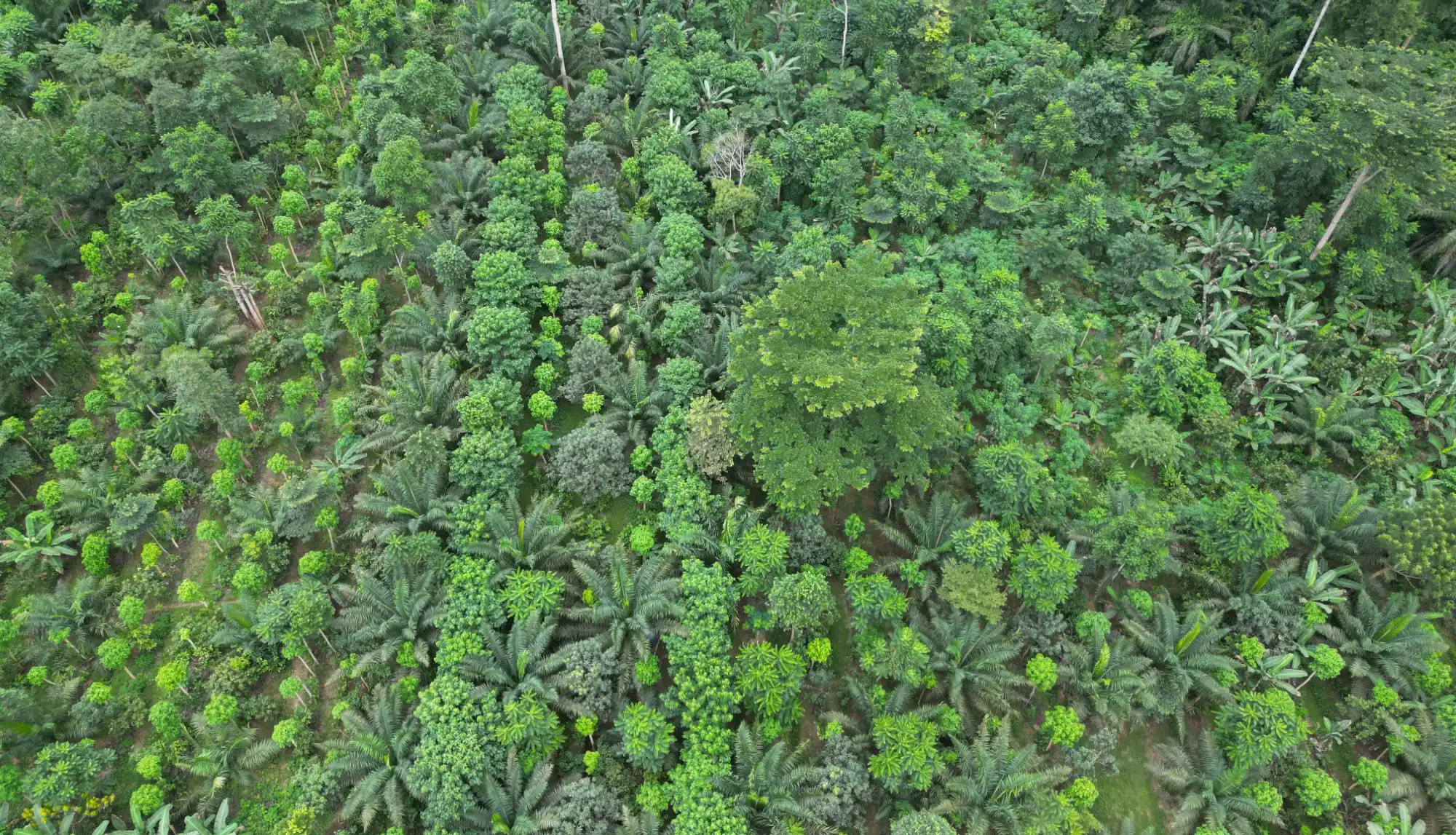
A polyculture is created through agroforestry systems.
That responds resiliently to pests and environmental factors.
Dynamic Agriculture @ Serendipalm
The Ghanaian farming sector (especially cocoa and oil palm cultivation) is characterized by monocultures, depleted soils, and declining yields. The effects of climate change are already visible and are expected to cause further production losses.
Serendipalm aims to demonstrate alternatives and therefore began gaining experience with Dynamic Agroforestry (DAF) in 2017. A total of 90 hectares of DAF land and a tree nursery were established, which also serve as demonstration sites for training smallholder farmers.
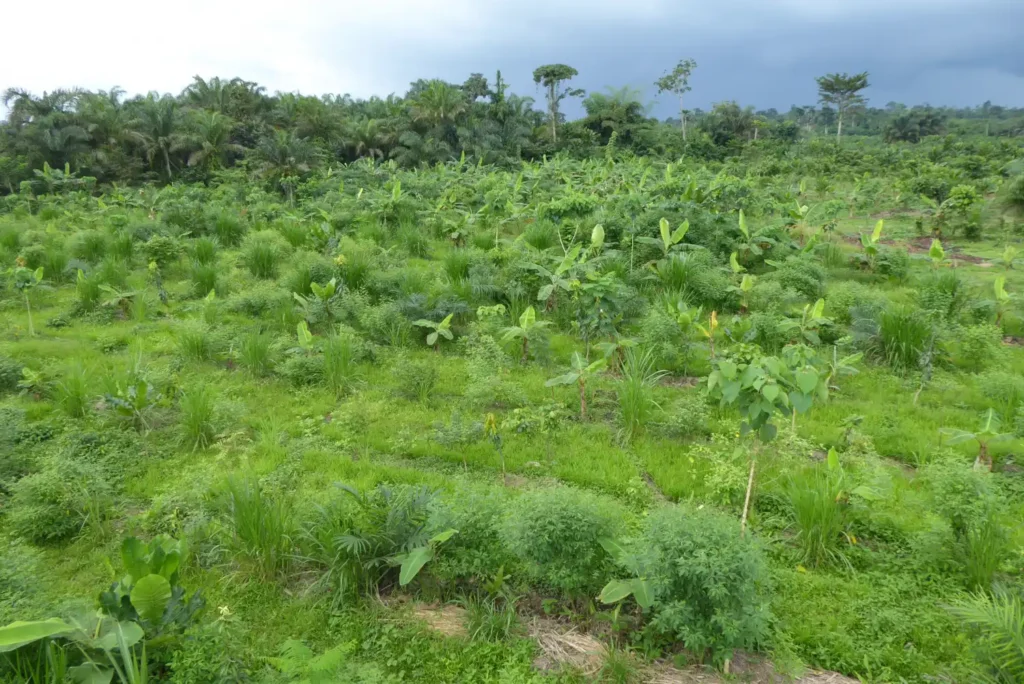
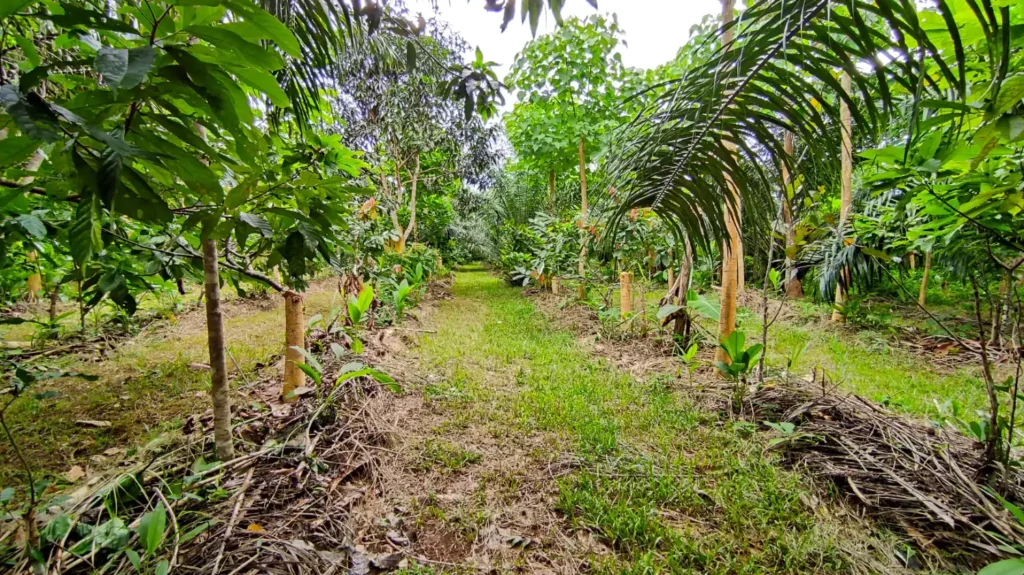
From 2020 to 2023, Serendipalm supported 430 smallholder farmers in planting and managing an additional 300 hectares of DAF land. These areas combine cocoa, oil palm, forest trees, and shrubs with a wide variety of other crops such as citrus fruits, mangoes, avocados, cashews, and bananas. This project was supported by the German Investment and Development Corporation (DEG). Smallholder farmers as well as technical teams received training in land management and maintenance.
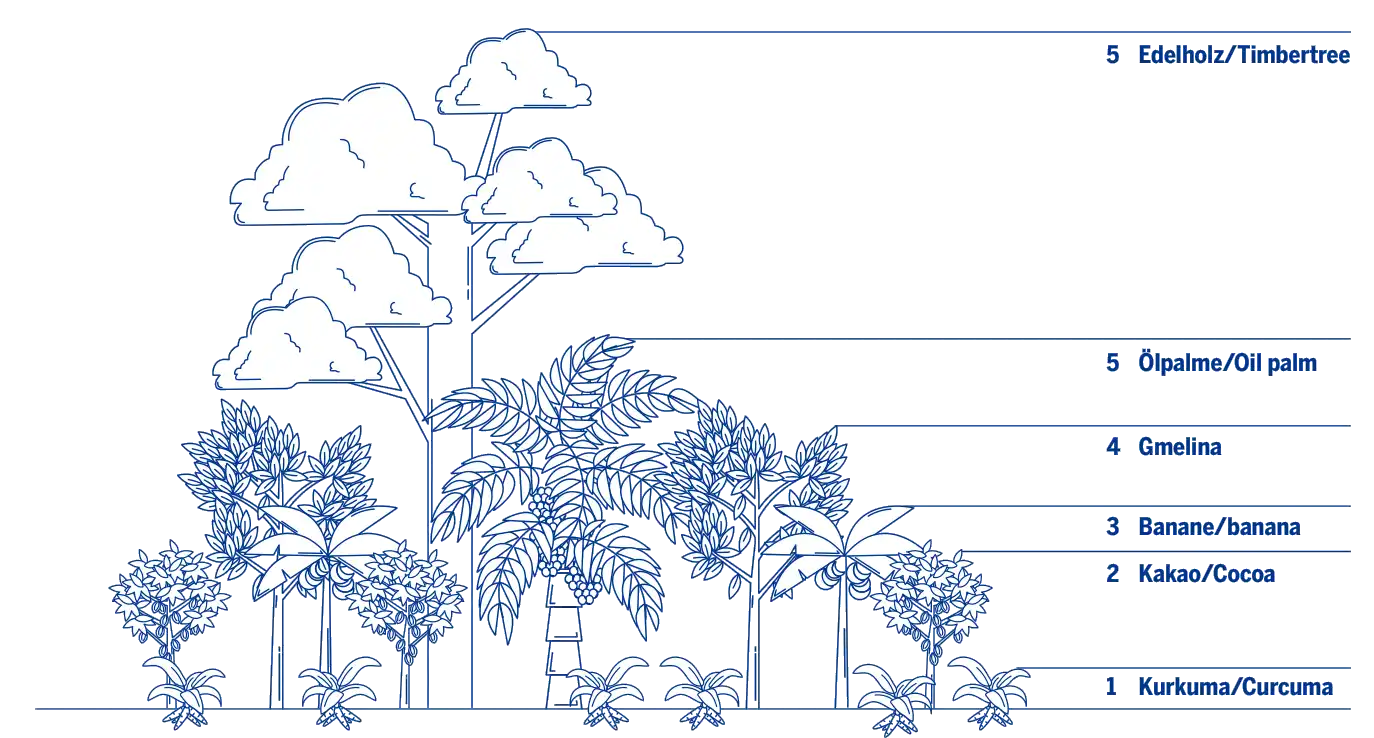
This graph illustrates the different strata in a DAF system. Like how it is implemented at Serendipalm.
In July 2025, Serendipalm began planting a further 800 hectares in various forms of mixed agroforestry. In addition to diverse trees and shrubs, field crops such as cassava and pineapple are also being cultivated there.